Build your 72-hour emergency kit for your household
The Cabinet Office’s Be Ready checklist says: ‘Being ready for 3 days helps you manage while support reaches those most in need.’ Price your household’s list, add it to your cart or print it. Free, no account needed.
Page updated on .
The kit at a glance
What the base kit provides for 4 people when the water, the power or the network goes down:
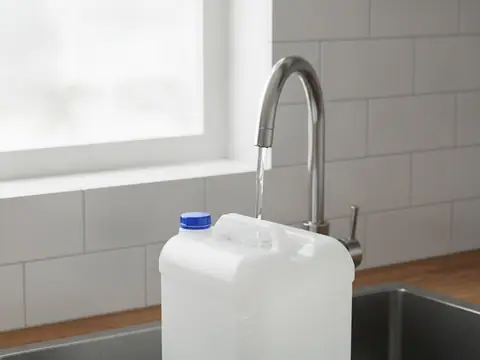
Drink
36 litres of bottled water, 9 litres per person
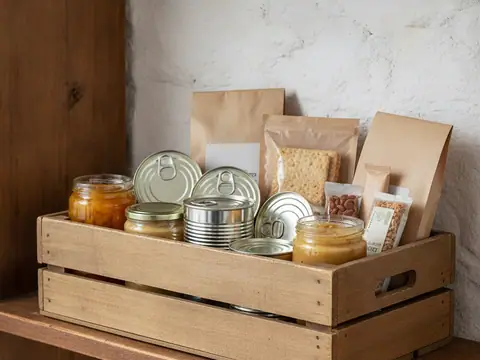
Eat
Three days of food, no cooking, no fridge
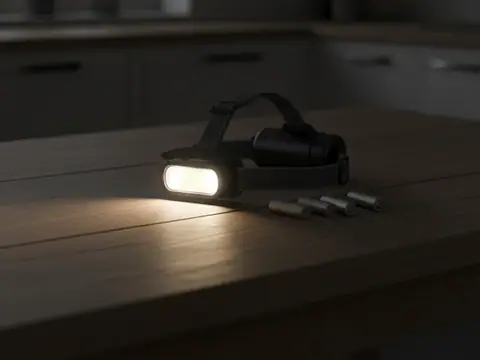
Light
4 head torches and 2 lanterns
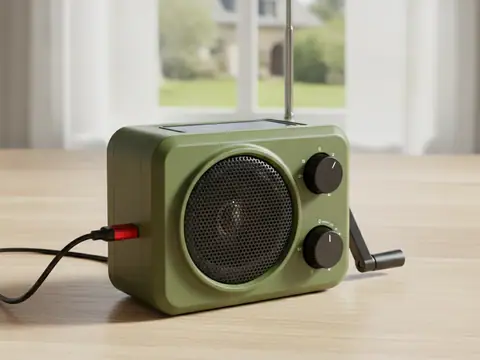
Stay informed
A battery or wind-up radio, even with no internet
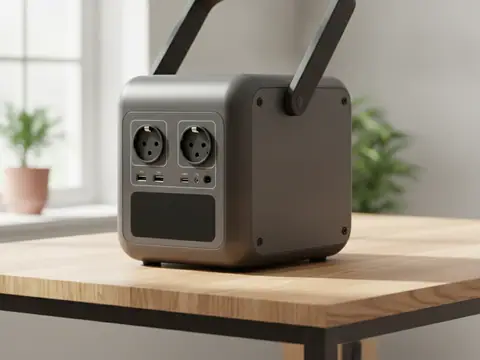
Recharge
Phones, lights and radio: a 2 kWh power station, a 400 W panel
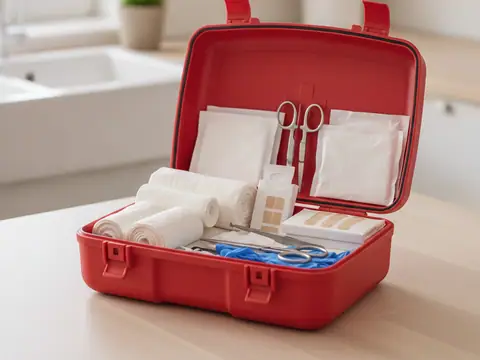
First aid
A first aid kit, plus your usual medicines

Body heat
4 foil survival blankets: the kit does not heat the home
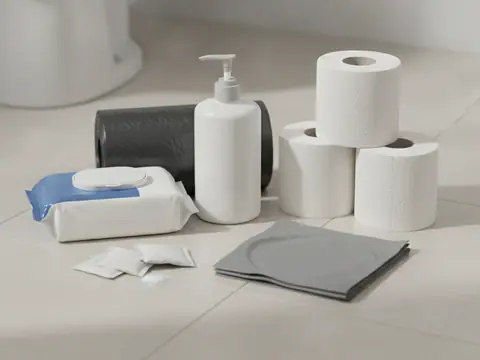
Stay clean
Hand gel, wipes and emergency toilet bags when the water is off
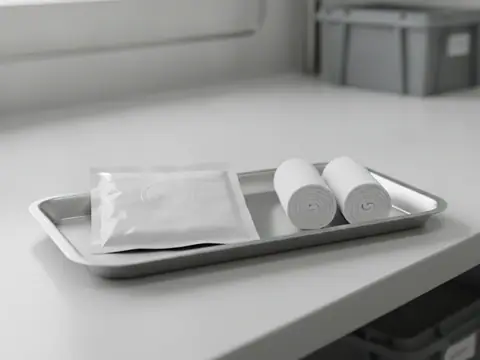
Flood, wildfire or storm modules come on top, depending on the risks where you live. Illustrative photos showing the type of item, not a recommended model. AI-generated images.
Your household and the risks where you live
Reference household: 2 adults + 2 children. The 2 kWh station is sized for 2 to 5 people: from 6 people, the list adds a second one, with its own panel.
The list, line by line
For 4 people: add each line to your cart, or a whole part in one click, at your household’s quantities. Your cart is kept from one visit to the next.
Station and panel: 72 hours for the survival uses (lighting, phones, radio, internet for a few hours), even without sun — then one big use at a time. Heating is not covered by the kit: an electric heater would empty the station in about an hour.
Indicative UK prices including VAT, checked on 6 November 2026: check them again before you buy. Options and your medicines are not counted.
Essential
The base kit, for every household: each line is counted in the total, except your medicines.
Energy
LiFePO4 power station, 2 kWh
£900–£1,250
Recharge lights, phones and the router during the power cut, then run one big appliance at a time.
1 station · 1 station for every 5 people
Why / details: LiFePO4 power station, 2 kWh
- What it lets you do
- Keep phones charged to call and receive alerts, recharge the lanterns, run the router a few hours a day, then run one big appliance at a time: a pump, an air purifier or a hotplate.
- The practical gain
- You stay reachable and informed without hunting for a socket or leaving home. LiFePO4 batteries take far more charge cycles than common batteries and lose little charge in storage, so it earns its place outside a crisis too: in the garden, camping or for DIY.
- Limits
- Inverter of at least 2,000 W (to start a pump), solar input of at least 400 W, UK (Type G) sockets. Full, it runs the survival uses for 72 hours, even without sun, but not the whole household’s essentials: fridge, freezer and router running non-stop last ≈ 16 hours in a winter storm. Heating is not covered: an electric heater would empty it in about an hour. Sized for 2 to 5 people.
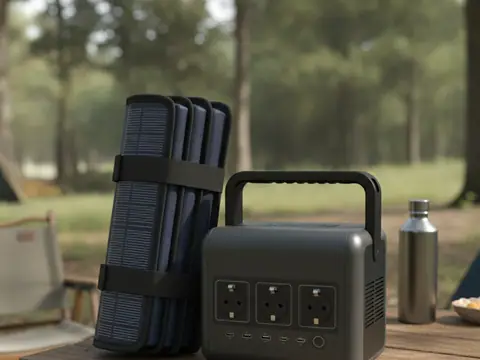
Foldable solar panel, 400 W
£340–£550
Recharge the station during the day, even a little.
1 panel · 1 panel for every 5 people
Why / details: Foldable solar panel, 400 W
- What it lets you do
- Put energy back into the station on any day with daylight, with no grid and no fuel, unfolded on a balcony, a windowsill or the ground.
- The practical gain
- The station is no longer a store that only goes down: each bright day gives back some charge for phones and lanterns. Folded, it fits in a cupboard and goes on holiday too.
- Limits
- Check the connector fits the station before buying. In winter it gives only a small part of its power: ≈ 0.07 kWh a day in a storm, ≈ 0.23 kWh on a cloudy day. On a clear summer day, ≈ 1.1 kWh a day.
Light and information
Head torches + spare batteries
£32–£76
Light with your hands free, without drawing on the station.
4 head torches · 1 head torch per person
Why / details: Head torches + spare batteries
- What it lets you do
- See where you are going and what you are doing — stairs, cellar, kitchen, first aid — with both hands free and a head torch for each person.
- The practical gain
- Fewer falls in the dark and no candles, which are a fire risk; everyone has their own light without drawing on the station.
- Limits
- They run on their own batteries, so they use none of the station’s energy.
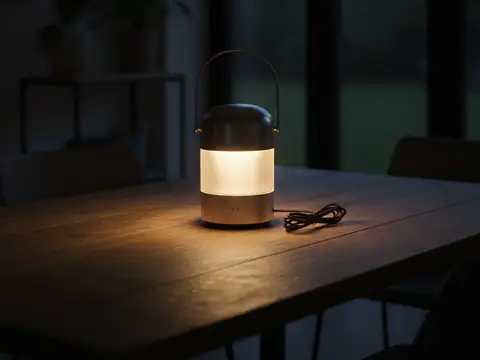
Rechargeable LED lanterns
£18–£50
Light the living room in the evening, about 5 hours a day.
2 lanterns · 1 lantern for every 2 people
Why / details: Rechargeable LED lanterns
- What it lets you do
- Light the whole living room for meals, games and time together in the evening, standing on the table or hanging up.
- The practical gain
- Steady room light that reassures everyone, children especially, and saves the head torches’ batteries; they recharge from the station or by USB.
- Limits
- Be Ready: ‘Torches are safer than candles.’
FM radio, battery or wind-up, with a USB socket
£20–£45
Follow official updates when the internet and the mobile network are down.
1 radio
Why / details: FM radio, battery or wind-up, with a USB socket
- What it lets you do
- Hear official updates, severe weather warnings and instructions to leave on local and national radio, even when the internet and the mobile network are down. Its USB socket can top up a phone in a pinch.
- The practical gain
- You know what to do and when without relying on an overloaded network: in a power cut, the radio is often the most dependable way to get updates. Wound up by hand, it works even with flat batteries.
- Limits
- It is on the Be Ready checklist: ‘FM radio (battery / wind up)’. Write down the frequencies of the stations you use for news.
Water
Bottled water
£7–£16
Drinking water for 3 days: Be Ready asks for 3 litres per person per day.
36 litres · 9 litres per person
Why / details: Bottled water
- What it lets you do
- Drink and take your medicines without relying on the tap, if the supply is cut off or your water company tells you not to drink the tap water.
- The practical gain
- No queue at a bottled water station and no trip out during the emergency: sealed bottled water stays safe when the tap water may not be.
- Limits
- 9 litres per person, in bottles: 3 litres a day for 3 days, for drinking only (Be Ready checklist). Cooking and washing need more, and so may baby formula, medical devices and pets. Use the bottles and replace them as you go.
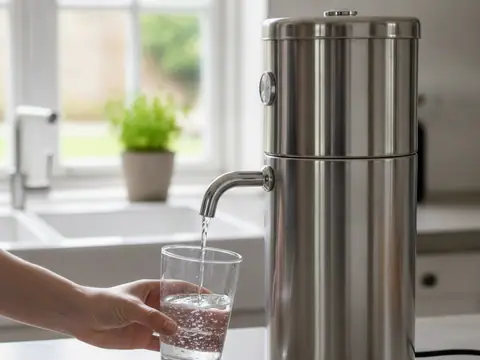
Gravity water filter
£60–£300
Last resort if the bottles run out: filter other water before treating it. Your water company is the best source of advice.
1 filter
A filter is only the first step. Be Ready: most other water sources need filtering before purification tablets, and boiling or tablets can help make the water safer to drink. The low end of the price is a portable filter, the high end a countertop one.
Why / details: Gravity water filter
- What it lets you do
- Filter other water — rainwater, a well, tap water after an incident — before you boil it or treat it with tablets, once the bottles start to run out.
- The practical gain
- A back-up plan if the emergency drags on and the bottled water runs low, without waiting for a delivery.
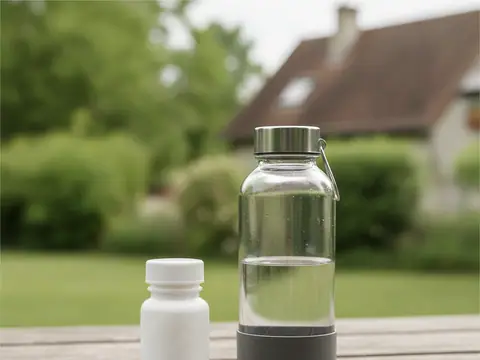
Water purification tablets
£14–£22
Treat other water after filtering it, if bottled water runs out.
1 box
Why / details: Water purification tablets
- What it lets you do
- Treat a container of filtered water with no flame and no electricity, if the bottled water runs out.
- The practical gain
- Light and compact, they back up the filter and slip into the grab bag, and you do not need the stove to boil the water.
- Limits
- Follow the label: tablets come in different strengths (Be Ready).
Empty food-grade water carrier, 20 litres
£14–£25
Fill it at the tap as soon as a water outage is announced.
1 water carrier · 1 water carrier for every 4 people
Why / details: Empty food-grade water carrier, 20 litres
- What it lets you do
- Set aside 20 litres of tap water per carrier as soon as an outage is announced, for cooking, washing and flushing the toilet.
- The practical gain
- The bottles stay for drinking and the carrier’s water goes on everything else. Filled only when a warning comes, it ties up no water the rest of the year.
Cooking
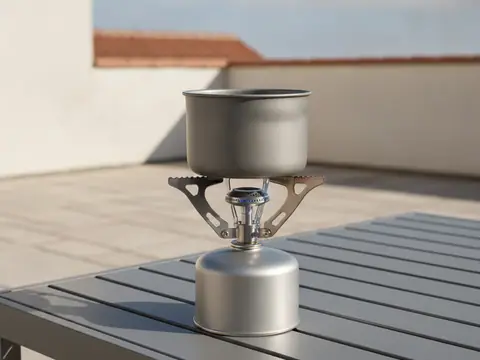
Screw-on cartridge stove + 6 cartridges (butane/propane mix, EN 417 thread)
£65–£105
Heat a meal and water without electricity: a comfort, not something you depend on.
1 set
Use it outdoors only, never indoors or in a tent (NHS): it can cause a build-up of carbon monoxide. The kit’s own advice: pure butane works poorly below about 0°C, hence the butane/propane mix.
Why / details: Screw-on cartridge stove + 6 cartridges (butane/propane mix, EN 417 thread)
- What it lets you do
- Boil water for a hot drink or soup and warm up a meal, outdoors only, with no electricity.
- The practical gain
- A hot meal and a hot drink lift everyone’s spirits, and none of the station’s energy goes on cooking.
Manual tin opener, multi-tool, lighter and matches
£16–£34
Open tins and light the stove without electricity.
1 set
Why / details: Manual tin opener, multi-tool, lighter and matches
- What it lets you do
- Open tins, cut, unscrew, make small repairs and light the stove, with no electric appliance at all.
- The practical gain
- The kit’s food stays within reach even without an electric tin opener, and one tool sorts out the small snags of an emergency.
- Limits
- Be Ready’s power-cut advice puts a tin opener with the tinned food.
Food
Food for 72 hours, no cooking needed
£56–£120
Eat for three days without relying on the stove or the fridge.
4 three-day rations · 1 three-day ration per person
≈ 2,200 kcal per adult and ≈ 1,600 per child per day (the kit’s own estimate). Food the family already eats, as Be Ready advises, that needs little water and rotates through everyday meals (first in, first out). Check for allergies.
Why / details: Food for 72 hours, no cooking needed
- What it lets you do
- Put proper meals on the table with no cooking, no fridge and no shopping, from food the family already knows.
- The practical gain
- No trip to shops that are packed or shut, and no improvised meals; the stock rotates through your everyday meals, so nothing goes to waste.
Health
First aid kit, level 1 ‘Essential’
£16–£45
Minor care when the emergency services are stretched.
1 kit
Why / details: First aid kit, level 1 ‘Essential’
- What it lets you do
- Clean and cover a wound, put on a plaster or a bandage, take out a splinter, rinse an eye, take a temperature: everyday minor care.
- The practical gain
- You treat minor injuries yourself without adding to the load on stretched services; a small wound cleaned and covered straight away is less likely to become infected.
- Limits
- Sterile dressings, assorted waterproof plasters, bandage, medical tape, antiseptic, eyewash solution, gloves, tweezers and a thermometer (the items Be Ready names), plus scissors. No medicines in it: they have their own line.
Your usual medicines for at least 3 days + a written list of them
Keep taking your treatment during the emergency.
1 supply
Your medicines — ask your GP or pharmacist; not priced here
Order repeat prescriptions in good time: Be Ready says up to 5 working days before you need them. Ask your pharmacist about any other medicine. No buy link, no dose and no price here.
Why / details: Your usual medicines for at least 3 days + a written list of them
- What it lets you do
- Keep taking your usual medicines without a break, even if the pharmacy is shut or out of reach; the written list tells any pharmacist or doctor exactly what you take.
- The practical gain
- You avoid an interrupted treatment turning into a second health problem during the emergency.
Foil survival blankets
£4–£12
Reduce body heat loss, on top of your own blankets.
4 blankets · 1 blanket per person
They do not replace heating: the kit does not heat the home. In a power cut, Be Ready advises blankets, layered clothing, and keeping doors of unused rooms and curtains closed.
Why / details: Foil survival blankets
- What it lets you do
- Keep in body warmth: wrap up in one, add a layer to a bed or sleeping bag, protect an injured or shocked person from cold and damp.
- The practical gain
- Light, instant protection for each person that slows the body’s cooling with no energy at all; one also fits in the grab bag.
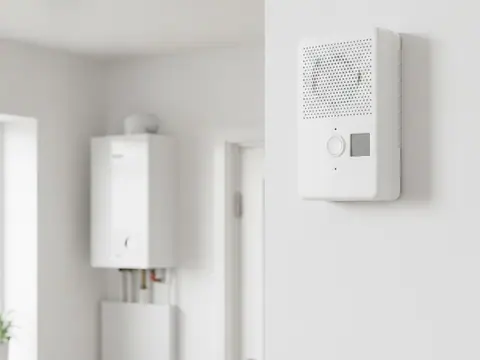
Carbon monoxide alarm
£13–£25
Sound the alarm if a boiler, fire or wood burner gives off carbon monoxide.
1 alarm
Be Ready advises an audible alarm meeting British or European standards (BS Kitemark or EN 50291); the NHS says one in each room with a gas, oil, coal or wood appliance. In England, landlords must fit one in any room with a fixed combustion appliance, gas cookers excepted; elsewhere in the UK, check your nation’s own rules. It does not replace ventilation, or using the stove outdoors.
Why / details: Carbon monoxide alarm
- What it lets you do
- Get a loud warning as soon as carbon monoxide builds up — a gas you cannot see or smell — near a boiler, fire or wood burner, including at night.
- The practical gain
- You can act in time — open windows, get out, call for help — when nothing else would tell you the gas is there.
Hygiene
Hand sanitiser, wet wipes, 20 × 50-litre bin bags, toilet roll, emergency toilet bags
£26–£36
Stay clean and manage the toilet when the water is off.
1 set · 1 set for every 4 people
Why / details: Hand sanitiser, wet wipes, 20 × 50-litre bin bags, toilet roll, emergency toilet bags
- What it lets you do
- Clean your hands without running water, have a basic wash, deal with rubbish and use an emergency toilet when the toilet will not flush.
- The practical gain
- Less risk of stomach bugs and infections in a home without water, and a usable toilet without using up drinking water.
Documents and grab bag
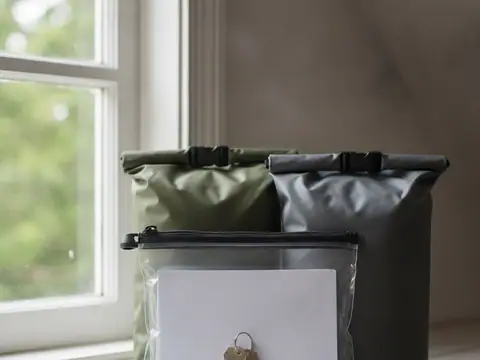
Waterproof pouch: copies of ID and documents, spare keys, list of medicines, cash in coins and notes, spare glasses
£8–£17
Keep the essential paperwork dry, ready to go.
1 pouch
Why / details: Waterproof pouch: copies of ID and documents, spare keys, list of medicines, cash in coins and notes, spare glasses
- What it lets you do
- Prove who you are, contact your insurer, show which medicines you take and get back in with the spare keys, even if the originals are lost, soaked or left behind.
- The practical gain
- Faster paperwork after the emergency (insurance, pharmacy, replacement documents) and no rummaging through drawers if you are told to leave; cash works when cards do not.
- Limits
- Be Ready lists cash (a mix of coins and notes), copies of IDs and documents, and important phone numbers written on paper.
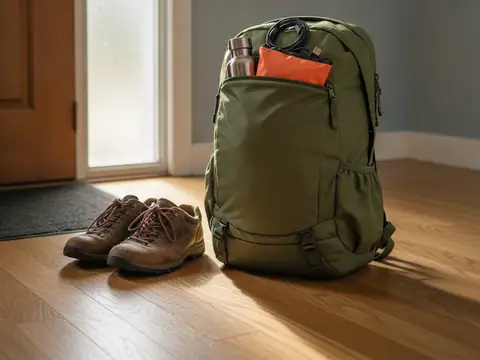
Grab bag for the household, packed in advance
£13–£35
For any evacuation, not only a wildfire or a flood: what you would take if asked to leave your home quickly.
1 bag
Be Ready suggests a spare bag, stored somewhere easy to get to, with your medicines, a first aid kit, important documents, a torch, bottled water, warm waterproof clothing and baby care items. Leaving when told to evacuate comes first: the station (over 20 kg) stays, the bag goes. Always follow the emergency services’ instructions (Be Ready).
Why / details: Grab bag for the household, packed in advance
- What it lets you do
- Leave within minutes when you are asked to, with medicines, a first aid kit, documents, a torch, water and warm waterproof clothing already packed.
- The practical gain
- No time lost gathering essentials under pressure: you can follow the instruction to leave straight away, which comes before everything else.
Morale
Pack of playing cards + a cooperative family game (2 to 6 players, age 7+) + notebook and pencils
£17–£31
Keep spirits up: three days without power is a long time, especially for children.
1 set
Why / details: Pack of playing cards + a cooperative family game (2 to 6 players, age 7+) + notebook and pencils
- What it lets you do
- Fill the evenings with no screens and no power, keep a routine and get the children involved; the notebook is also for writing down instructions and contacts.
- The practical gain
- Less stress and fewer tensions in a household cut off from the world; children with something to do live through the power cut as something out of the ordinary rather than something frightening.
Comfort
On top of the base kit: the gear for your area’s risks, counted once its module is switched on, and options for more comfort, never counted.
No risk gear yet: switch on the flood or wildfire module above if your home is exposed (the storm module adds no gear).
Options
4 options, never counted in the total
Comfort option: countertop electric reverse-osmosis filter
£200–£450
Polish tap water day to day and, in a power cut, filter a store of clear water on the station: a comfort that never replaces bottled water.
not counted in the total
Pick a model without hot water: it draws ≈ 30–50 W while it filters, whereas a hot-water model draws more than the station’s inverter. About 1 L goes to waste for every 3 L filtered, more on some models: it is a tank you fill by hand, it makes no water and never makes unsafe water safe to drink. If your water company says not to drink the tap water, follow its advice: bottled water first, and never flood water, even filtered. Price checked on 9 November 2026.
Why / details: Comfort option: countertop electric reverse-osmosis filter
- What it lets you do
- Day to day, tap water that is nicer to drink; in a power cut, filter a store of clear tap water by running it on the station.
- The practical gain
- An appliance you use every day, not only in an emergency, and fewer packs of bottled water to carry home over the year.
Alternative: electric hotplate
£17–£30
Cook on the station, only if gas is ruled out at home.
not counted in the total · Replaces the line ‘Screw-on cartridge stove + 6 cartridges (butane/propane mix, EN 417 thread)’.
Why / details: Alternative: electric hotplate
- What it lets you do
- Cook and warm up food with no flame and no cartridge, plugged into the station, where gas is ruled out at home (building or tenancy rules, a flat with no outdoor space).
- The practical gain
- No cartridges to store and no flame to watch; in return it takes a large share of the station, so keep it for one or two hot meals a day.
- Limits
- Cooking on electricity (two hot meals and hot drinks a day) takes ≈ 0.5 kWh a day: over 72 hours for 4 people, that is ≈ 1.5 kWh, a little more than the winter-storm margin. Its power must stay below the inverter’s.
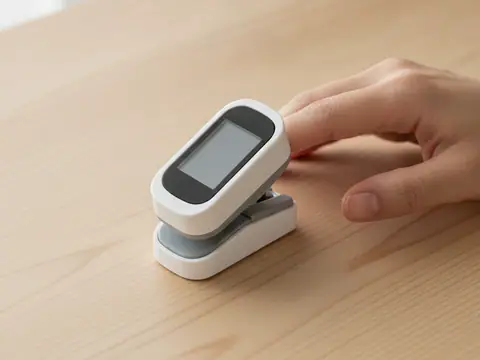
Level 2 ‘Family’ kit (add-on)
£60–£105
Go further: burns, sprains, monitoring.
not counted in the total
Why / details: Level 2 ‘Family’ kit (add-on)
- What it lets you do
- Dress a burn, support a sprain, cool a knock and keep an eye on someone who is unwell, with a paper manual for each step.
- The practical gain
- You can give first aid at home while you wait for a doctor or the emergency services to be reachable.
- Limits
- Burn dressings, mouldable splint, cohesive bandages, instant ice packs, pulse oximeter, paper first aid manual.
Level 3 ‘Trained’ kit (add-on)
£65–£75
Tourniquet and haemostatic dressing, for people who have done a course.
not counted in the total
Only after training (the kit’s own advice). The real upgrade is a first aid course: St John Ambulance community courses start at £25 for 3 hours; the British Red Cross runs courses and free workshops (no qualification); in Scotland, St Andrew’s First Aid.
Why / details: Level 3 ‘Trained’ kit (add-on)
- What it lets you do
- Stop severe bleeding with a tourniquet or a haemostatic dressing, if you have learnt how on a course.
- The practical gain
- With heavy bleeding the first minutes count: in trained hands, this kit can save a life while help is on its way.
Your kit: £1,639–£2,794
Numbers and alerts in the UK
In the UK, in an emergency, call 999 (or 112) if someone is in immediate danger. Each number below says where it works:
- 999In the UK: police, fire and ambulance when someone is in immediate danger (source)
- 112In the UK: the same emergency services as 999, free from any phone (source)
- 111In England, Scotland and Wales: urgent medical help when it is not an emergency (NHS 111; NHS 24 in Scotland) (source)
- 111In England, Scotland and Wales: urgent help for your mental health — call 111 and choose the mental health option (option 2 in Wales) (source)
- 0808 808 8000In Northern Ireland: Lifeline, the crisis response helpline, confidential, free and open 24 hours a day (source)
- 116 123Samaritans, listed by the NHS in England and Wales and by nidirect in Northern Ireland: talk to a trained volunteer about anything troubling you, free, 24 hours a day (source)
- 101In the UK: police, non-emergency (source)
- 105In England, Scotland and Wales: report a power cut (free) (source)
- 03457 643643In Northern Ireland: report a power cut (source)
- 0800 111 999In England, Scotland and Wales: National Gas Helpline, free, 24 hours a day, if you think a gas appliance is leaking carbon monoxide (source)
- 0800 002 001In Northern Ireland: Gas Emergency Service, if you smell gas (source)
- 0345 988 1188In England, Scotland and Wales: Floodline, to sign up for flood warnings by phone (24 hours) (source)
- 0800 80 70 60In England: report severe river or coastal flooding to the Environment Agency (24 hours) (source)
- 0300 2000 100In Northern Ireland: Flooding Incident Line (source)
Official alerts
- Emergency Alerts on your mobile phone: no sign-up, a loud siren-like sound even on silent, sent where there is a danger to life
- Flood warnings by phone, text or email: free sign-up for homes at risk in England (Scotland and Wales have their own)
- Met Office National Severe Weather Warnings
- A battery or wind-up radio: updates may be given on the radio during a power cut
The official guide
Be Ready (Cabinet Office, UK Government, advice updated 22 October 2026, UK-wide)
Write these numbers on paper too, with your local radio frequencies: in a power cut, your internet and mobile signal may go (Be Ready).
Energy: what the station can really run
What it does not run: the household’s full essentials as the dashboard counts them (fridge, freezer, router and standby), that is 8.7 kWh over three days for 4 people. In a winter storm it covers them for ≈ 16 hours in all. For the same kit, the Azimut dashboard shows 1 day in a power cut, because it counts these full essentials, not the survival uses alone.
The calculation in detail: three tables and the assumptions
| Quantity | Winter storm | Cloudy winter | Clear summer |
|---|---|---|---|
| Usable battery (2 kWh × 0.85) | 1.7 kWh | 1.7 kWh | 1.7 kWh |
| 400 W panel, per day | ≈ 0.07 kWh | ≈ 0.23 kWh | ≈ 1.1 kWh |
| Energy available over 72 hours | ≈ 1.9 kWh | ≈ 2.4 kWh | ≈ 5.1 kWh |
| Survival uses over 72 hours | ≈ 0.66 kWh | ≈ 0.66 kWh | ≈ 0.66 kWh |
| Survival uses served to the end | yes | yes | yes |
| Margin for one big use | ≈ 1.3 kWh | ≈ 1.7 kWh | ≈ 4.5 kWh |
| Full essentials over 72 hours | 8.7 kWh | 8.7 kWh | 8.7 kWh |
| Full essentials covered | ≈ 16 hours | ≈ 20 hours | ≈ 43 hours |
Dashboard assumptions applied to the kit: 85% of the battery usable; essentials: fridge, freezer, router and standby, plus 0.35 kWh per person per day; solar yield of 950 kWh per kWp per year (a mid-range figure for the UK); in winter, the December yield (22% of the annual average) and, in a storm, 30% of that. In summer, a panel laid on the ground or on a balcony stays well below its best output.
What are the survival uses?
| Use | Power | Per day | kWh per day |
|---|---|---|---|
| 2 LED lanterns | 5 W | 5 hours | ≈ 0.05 |
| 4 phones | 15 Wh | 1 charge | ≈ 0.07 |
| Broadband router / fibre box | 12 W | 4 hours | ≈ 0.05 |
| Radio, head torches | their own batteries | — | 0 |
| Losses (inverter off when not in use) | — | — | ≈ 0.05 |
| Total | ≈ 0.22 | ||
The margin: one big use at a time
In a winter storm, with what little sun the panel catches (≈ 0.07 kWh a day), ≈ 1.3 kWh is left once the survival uses are served. You choose what to spend it on: each line below takes the whole margin of a full station.
| Use | Consumption | With the margin |
|---|---|---|
| CPAP (sleep apnoea)Priority 1 if you have one. Other medical equipment (oxygen concentrator ≈ 300 W, ventilator…) can use up the margin in a few hours: make a plan with your care provider or clinical team and join the Priority Services Register. | 0.3 to 0.5 kWh a night | ≈ 3 nights |
| Modern fridge-freezer | ≈ 0.8 kWh a day | ≈ 1.5 days |
| 500 W submersible pump | ≈ 0.56 kWh an hour | ≈ 2.5 hours |
| 20 W HEPA purifier | ≈ 0.02 kWh an hour | ≈ 56 hours |
| Electric cooking for 4 peopleOver 72 hours: ≈ 1.5 kWh, a little more than the winter-storm margin. | ≈ 0.5 kWh a day | ≈ 2.5 days |
| 300 W dehumidifierThat is why it is a recovery tool, not a power-cut one. | ≈ 0.33 kWh an hour | ≈ 4 hours |
These figures assume a full station: charge it to 100% as soon as a storm is forecast, as Be Ready advises for phones, power banks and back-up batteries for medical equipment. The kit’s own estimate: if the cut comes without warning, a station stored half-charged still runs the survival uses of 4 people for 72 hours, even without sun. In a winter storm, the margin for one big use then falls to ≈ 0.4 kWh.
For an oxygen concentrator, a ventilator or other powered medical equipment, the station is not enough: make a plan now with your care provider or clinical team for a power cut, and join your energy supplier’s Priority Services Register (Customer Care Register in Northern Ireland).
First aid kit and 72-hour menu
The first aid kit in three levels
Level 1 — Essential
In the base kit
Sterile dressings, assorted waterproof plasters, crepe bandage, medical tape, antiseptic, eyewash solution, nitrile gloves, scissors, tweezers, thermometer, your usual medicines for at least 3 days + a written list of them.
£16–£45
Level 2 — Family
Optional
Burn dressings, mouldable splint, cohesive bandages, instant ice packs, pulse oximeter, paper first aid manual.
£60–£105 · not counted in the total
Level 3 — Trained
Only after a course
Tourniquet, haemostatic dressing.
The real upgrade is a first aid course: St John Ambulance community courses start at £25 for 3 hours; the British Red Cross runs courses and free workshops (no qualification); in Scotland, St Andrew’s First Aid.
£65–£75 · not counted in the total
Indicative UK prices including VAT, checked on 6 November 2026.
Medicines: your usual ones for at least 3 days and a written list of them; order repeat prescriptions in good time and ask your pharmacist about anything else. No buy link or dose here.
In a power cut, keep the fridge and freezer shut: the Food Standards Agency says a fridge stays cold for up to 4 hours, a full freezer up to 48 hours (24 hours if half full). Once the fridge reaches 8°C or above, throw chilled food away after 4 hours, then eat from your stock.
Emergency kit: frequently asked questions
How does the list adapt to my household?
Choose the number of people, from 1 to 8: the per-person lines — water (9 litres each), food, head torches, foil blankets and, with the wildfire module, masks — follow that number, prices included. Other lines follow it in steps: a lantern for every 2 people; a water carrier, a hygiene set and, with the flood module, a set of boots and gloves for every 4; and a power station with its panel for every 5: from 6 people, the list counts two, and the energy figures follow. Switch on the flood and wildfire modules if they apply where you live. Add each line to your cart, or a whole part in one click: the cart keeps your household’s quantities.
What can a 2 kWh power station and a 400 W panel really run?
They give 72 hours for the survival uses (lighting, phones, radio, internet for a few hours), even without sun — then one big use at a time. The whole household’s essentials (fridge, freezer, router and standby, plus 0.35 kWh per person per day) do not fit: ≈ 16 hours in a winter storm for 4 people, with a full station, and the Azimut dashboard shows 1 day for the same kit. Heating is not covered by the kit: an electric heater would empty the station in about an hour.
How much does an emergency kit cost for a family of four?
For 2 adults and 2 children, the base kit comes to ≈ £1,639–£2,794, of which ≈ 64–76% is the station and the panel; without them, ≈ £399–£994. The Be Ready checklist asks for a charged power bank, not a station, and suggests picking up items during your regular shopping to spread the cost. The flood module adds ≈ £253–£497, the wildfire module ≈ £139–£374. Indicative UK prices including VAT, checked on 6 November 2026; options and medicines are not counted.
Which modules should I switch on?
You choose them here. Flood: if your home is in a flood risk area — check your long-term flood risk on GOV.UK (England), Natural Resources Wales, SEPA (Scotland) or nidirect (Northern Ireland). Wildfire: if your home is close to countryside that can burn in warm, dry weather. Storms add no gear: they mostly bring power cuts, which the base kit is built for.
Why do medicines have no price or link?
This page never gives a buy link, a dose or a price for a medicine. In the UK, prescription-only medicines need a prescription, pharmacy medicines are sold only in a pharmacy and general sale medicines also in shops (MHRA). Keep your usual medicines for at least 3 days and a written list of them, order repeat prescriptions up to 5 working days ahead (Be Ready), and ask your pharmacist about anything else.
A planning list, not official instructions. Safety rules are checked against the UK official sources listed below; where a rule is the kit’s own advice, the line says so. In an emergency, the instructions of the emergency services and your local council come first.
Official sources
- Be Ready (Cabinet Office) — be ready for emergencies
- Be Ready checklist (PDF, October 2026)
- Be Ready — power cuts
- Be Ready — water supply interruptions
- Be Ready — flooding
- Be Ready — wildfires
- Be Ready — storms
- GOV.UK — Emergency Alerts
- GOV.UK — get flood warnings (Floodline)
- Food Standards Agency — food safety in a power cut
- NHS — carbon monoxide poisoning
- NHS — when to use NHS 111
- NHS — where to get urgent help for mental health (England)
- NHS 24 — mental health services (Scotland)
- NHS 111 Wales — mental health and wellbeing (111, option 2)
- NHS 111 Wales — suicidal thoughts (Samaritans)
- nidirect — mental health emergency (Northern Ireland)
- HSE — domestic gas: ventilation and flues
- UKHSA — wildfire smoke and health
- HSENI — gas emergency number for Northern Ireland callers
- nidirect — energy, power supply and utilities (Northern Ireland)
- nidirect — household emergency kit (Northern Ireland)
- GOV.UK — smoke and carbon monoxide alarms: rules for landlords (England)
- UKHSA — flooding and health
- GOV.UK — check your long-term flood risk (England)
- GOV.UK — adapting your home to flood risk (Kitemarked flood products)
- MHRA — medicine classes (prescription-only, pharmacy, general sale)
Energy: Azimut AI’s calculation with its dashboard’s assumptions (methodology). Medicines: MHRA classes (prescription-only, pharmacy, general sale).